
Pallet shipping: prepare, quote, and move palletized freight without costly mistakes
By Rubi Rodriguez
Published on August 21, 2026
In short
Most pallet shipping cost overruns come from inaccurate shipment data rather than the carrier rate itself. The best quote is the one that reflects complete shipment information and balances price with transit time, service level, and added-fee risk. Finally, compare the final invoice with the original quote to identify recurring cost drivers and prevent future overruns.
In short
Most pallet shipping cost overruns come from inaccurate shipment data rather than the carrier rate itself. The best quote is the one that reflects complete shipment information and balances price with transit time, service level, and added-fee risk. Finally, compare the final invoice with the original quote to identify recurring cost drivers and prevent future overruns.
Pallet shipping looks straightforward until a damaged load, a reclassified freight bill, or a mismatched quote shows up after delivery. Most of those problems start earlier than people expect, in how the pallet was built, measured, and described before it ever left the dock. This guide walks through the full workflow, from choosing the right pallet to auditing the invoice after delivery, so you can prepare, quote, and move palletized freight without the costly mistakes that eat into margin.
What is pallet shipping and when should you use it?
Pallet shipping groups and stabilizes multiple boxes or items on a single base, typically a wood or plastic pallet, so they can be moved as one unit with a pallet jack or forklift. It is the standard way to move freight that is too large or too heavy to ship efficiently as individual parcels, but not large enough to require a full truckload.
Pallet shipping vs parcel shipping
Parcel shipping moves individual, smaller packages through a parcel network. Once an item is heavy, bulky, or part of a multi-box order, palletizing it and shipping it as freight is usually more cost-effective and reduces the number of individual touchpoints where damage can occur. Knowing when to choose LTL vs parcel shipping upfront avoids paying parcel surcharges on freight that should have moved on a pallet in the first place.
Pallet shipping vs crates and freight boxes
Crates and freight boxes add a rigid enclosure around the product. Pallets alone work well for goods that are already boxed, shrink-wrapped, or otherwise self-supporting, while more fragile or irregular items may need a crate on top of the pallet base.
When palletized freight usually moves as LTL
Most single-pallet or partial-load shipments move as less-than-truckload (LTL) freight, where your pallet shares space and cost with other shippers’ freight on the same truck.
Step 1: choose the right pallet for the shipment
Standard pallet sizes and why dimensions matter.
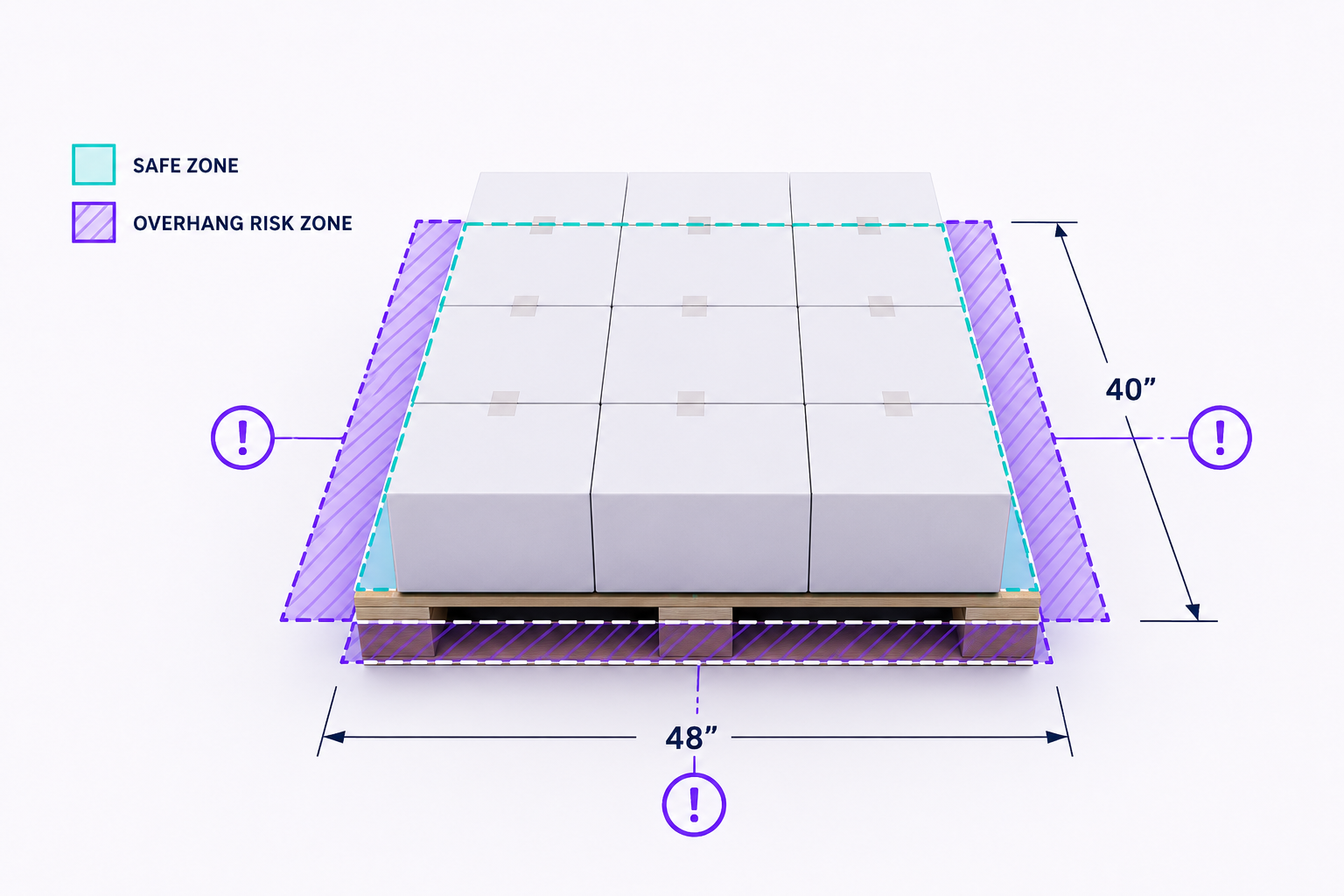
The 48 x 40 inch pallet is the most common footprint in North America, but it does not fit every product, warehouse rack, or carrier network. Confirming the required dimensions with your carrier or receiver before you build the load avoids handling problems later.Wood, plastic, and other pallet materials.
Wood pallets remain the most common choice for LTL freight. Plastic pallets offer more consistent weight and durability but cost more upfront and may face restrictions in some international shipments.Check strength, stiffness, condition, and forklift access.
A pallet needs enough strength to support the load without sagging, and enough clearance for forklift forks or a pallet jack to lift it safely. Insist on an intact pallet, free of broken boards, protruding nails, or splintered edges, and rated for the weight it will carry.Step 2: stack the freight for stability and protection
Keep the load within the pallet footprint.
Letting boxes hang over the edge of the pallet, known as overhang, increases the risk of damage during handling and can change the shipment’s billable dimensions.Distribute weight evenly and place heavier items at the bottom.
An evenly distributed, bottom-heavy load resists tipping and reduces stress on the boxes underneath.Use column stacking, interlocking, or additional support appropriately.
Column stacking keeps box corners aligned for maximum strength, while interlocking patterns can improve stability for mixed box sizes. The right method depends on the product and box strength.Protect corners, surfaces, and fragile goods.
Corner boards, edge protectors, and appropriate cushioning reduce damage risk at the points most exposed during loading, transit, and unloading.Step 3: secure and wrap the pallet correctly
Stretch wrap, straps, corner boards, and top protection.
A combination of stretch wrap, banding straps, and corner boards keeps the load stable as one unit through multiple handling points.Prevent movement without crushing the product.
Wrap and strap tightly enough to prevent shifting, but not so tightly that it deforms boxes or damages the product inside.Make labels and handling instructions visible.
Shipping labels, “this side up” markings, and any handling instructions need to stay visible after wrapping, not buried under a layer of stretch film.
Step 4: measure, weigh, and describe the shipment accurately
Four data points determine whether the shipment is billed correctly the first time:
| What to record | Why it matters |
|---|---|
| Full dimensions, taken after wrapping | Measure length, width, and height only once the pallet is fully wrapped and strapped, since packaging materials add to the final dimensions used for billing. |
| Total gross weight (pallet + packaging) | The pallet itself, along with any wrap, straps, and dunnage, adds weight that needs to be included in the total, not just the weight of the product. |
| Precise commodity description | A vague description invites a reclassification. Specific, accurate wording about what is actually being shipped protects you from a costly correction after pickup. |
| Density and NMFC freight class | Freight class is typically based on density, handling characteristics, and value. Getting this number wrong is one of the most common causes of a rate change after the shipment has already moved. |
Accurate data is the first protection against re-rates, reclassifications, and gaps between the quoted and invoiced amount. This is also where a platform like Lazr adds practical value: structured intake fields for dimensions, weight, and commodity type reduce the manual re-entry that causes these errors in the first place.
Step 5: get an accurate pallet shipping quote
The information required for a reliable quote.
A dependable quote needs the origin, destination, dimensions, weight, number of pallets, commodity type, freight class or density, value, pickup and delivery dates, and any access constraints at either end.Why the cheapest quote is not always the lowest-cost option.
Comparing quotes on rate alone ignores transit time, service level, carrier fit, coverage, reliability, and the accessorial charges that might apply. A slightly higher quote with fewer accessorial surprises often ends up cheaper overall.Common accessorial charges to anticipate.
Typical accessorials include liftgate service, residential delivery, limited access locations, inside delivery, appointment scheduling, redelivery attempts, and detention or storage fees.Compare LTL rates and services in one workflow.
Lazr’s Pricing Intelligence lets shippers compare LTL rates and service levels from more than 100 carriers side by sideStep 6: prepare the bill of lading and shipment documents
What belongs on the BOL.
A complete bill of lading includes shipper and consignee details, a precise commodity description, freight class, piece count, weight, and any special handling instructions.Keep quote, BOL, labels, and shipment data consistent.
Mismatched information between the quote, the BOL, and the shipping labels is a common trigger for a rate adjustment after pickup.Add customs documents for cross-border pallet shipping.
International pallet shipments need commercial invoices and other customs paperwork in addition to the standard BOL. If you frequently ship cross-border, it helps to understand how LTL shipping works before you commit to a carrier or lane.Step 7: schedule pickup and prepare the loading area
Confirm equipment and access requirements.
Confirm ahead of time whether the pickup location has a forklift or dock, and whether the destination has the same, since a mismatch can trigger a liftgate charge.Make the pallet accessible, stable, and ready on time.
A pallet that is not staged, stable, and accessible when the driver arrives risks a missed pickup window or an additional attempt fee.Document the condition before handoff.
Photographing the pallet before handoff creates a reference point if a damage claim needs to be filed later.Step 8: track palletized freight beyond a simple status update
Centralize carrier milestones and shipment exceptions.
Tracking across multiple LTL carriers usually means checking several separate portals. Centralizing milestones and exception alerts in one view removes that manual checking.Give teams and customers usable visibility.
Warehouse, customer service, and sales teams all need visibility into where a shipment stands, without each one calling the carrier separately.Act on delays before they become delivery failures.
Catching a delay early, while there is still time to notify the customer or adjust a delivery appointment, prevents it from turning into a failed delivery or a return.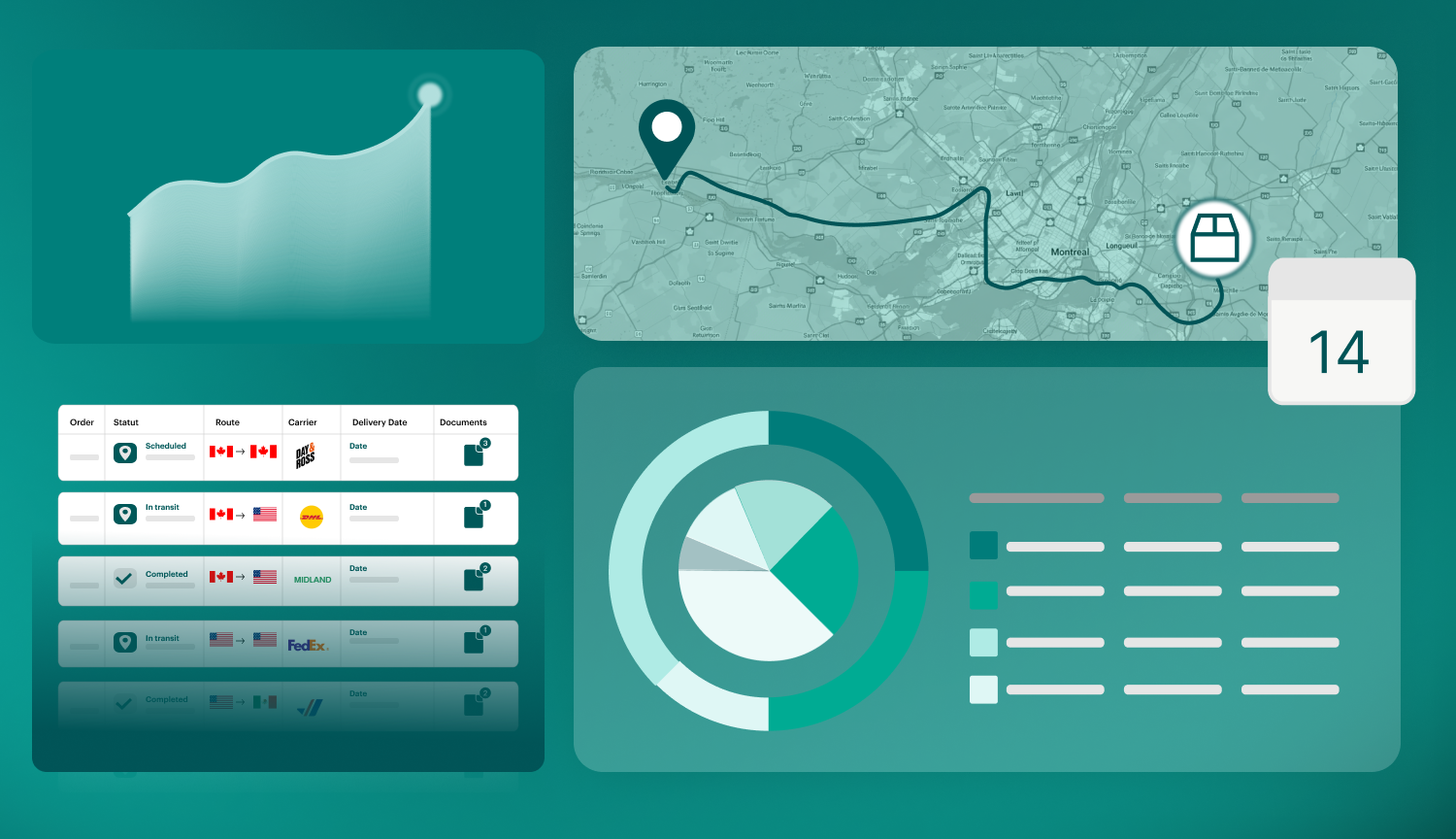
Step 9: audit the shipment after delivery
Compare the quoted amount with the final invoice.
A gap between the quoted and invoiced amount usually points to a reclassification, a dimension correction, or an accessorial charge that was not on the original quote.Review reclassifications and accessorial charges.
Reviewing these charges by carrier and lane over time reveals whether a specific carrier or shipment type is driving repeat cost increases.Identify patterns by carrier, destination, volume, and user.
Lazr’s analytics and Client Report tools surface these patterns automatically, using shipment-level data such as freight class accuracy and accessorial frequency, so recurring cost drivers are visible instead of buried in individual invoices.The most common pallet shipping mistakes
- Damaged or undersized pallet
- Overhang or unstable stacking
- Incomplete wrapping or strapping
- Inaccurate dimensions or weight
- Vague commodity description
- Incorrect freight class
- Missing accessorial requirements
- Inconsistent BOL and quote data
- No post-delivery invoice review
Pallet shipping checklist: before you book
- Pallet: intact, correctly sized, rated for the load weight.
- Packaging: boxes within pallet footprint, no overhang.
- Measurements: dimensions recorded after wrapping, full gross weight included.
- Classification: density calculated, correct freight class identified.
- Quote inputs: origin, destination, commodity, value, dates, access needs confirmed.
- Accessorials: liftgate, residential, inside delivery, or appointment needs flagged.
- Documents: BOL, labels, and customs paperwork consistent with the quote.
- Pickup readiness: load staged, accessible, and equipment confirmed.
- Tracking: milestones and exception alerts set up before the shipment departs.
Requirements can vary by carrier, commodity, lane, and service level, so treat this as a starting checklist rather than a universal standard.
Better pallet shipping comes from controlling the full workflow
Preparing the pallet correctly, sending accurate data, comparing the right service instead of only the lowest rate, and auditing the results afterward is what reduces damage, unexpected fees, and delays over time. This is a workflow problem more than a pricing problem, and treating it that way is what actually protects margin on LTL and pallet freight. Explore Lazr’s LTL shipping software to see how the full process fits together.
Frequently Asked Questions
What is the standard pallet size for LTL shipping?
The 48 x 40 inch pallet is the most common footprint in North America, but carriers and receivers can require different dimensions, so confirm before you build the load.
How do I calculate freight class for a pallet shipment?
Freight class is generally based on the density of the shipment along with handling characteristics and value. Getting the density calculation and commodity description right up front reduces the risk of a reclassification after pickup.
Why did my pallet shipping invoice not match the quote?
A mismatch usually comes from a dimension or weight correction, a freight class reclassification, or an accessorial charge, such as a liftgate or residential delivery fee, that was not included on the original quote.
What accessorial charges should I expect for pallet shipping?
Common accessorials include liftgate service, residential or limited access delivery, inside delivery, appointment scheduling, redelivery attempts, and detention or storage fees.
How can I avoid pallet shipping damage claims?
Use an intact, appropriately sized pallet, keep the load within the pallet footprint, distribute weight evenly, wrap and strap securely, and photograph the load before handoff so you have a reference point if a claim is needed.
-

Accessorial charges in freight
By Rubi Rodriguez • September 11, 2026Accessorial charges fall into three buckets: predictable service needs, data-driven corrections, and execution-related events. Not all of them can be eliminated, but you can prevent… -

Green shipping
By Rubi Rodriguez • September 4, 2026Green shipping depends on operational choices, not just packaging or marketing claims. Right-sized packaging, appropriate service levels, and shipment consolidation can reduce both costs and… -
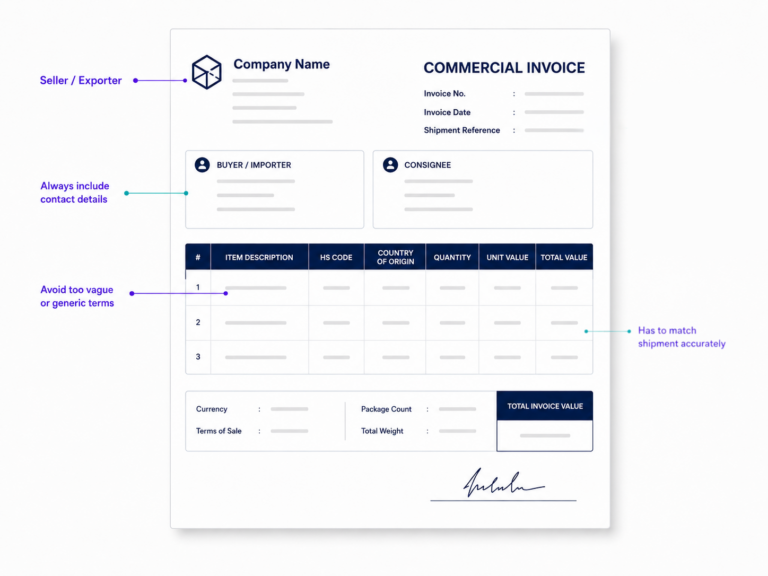
What is a commercial invoice in shipping?
By Rubi Rodriguez • August 28, 2026A commercial invoice must clearly and accurately state the goods, value, parties involved, country of origin, and HS codes to avoid customs delays. Because requirements…