
Accessorial charges in freight: what they are and how to prevent unexpected fees
By Rubi Rodriguez
Published on September 11, 2026
In short
Accessorial charges fall into three buckets: predictable service needs, data-driven corrections, and execution-related events. Not all of them can be eliminated, but you can prevent the avoidable ones, anticipate the predictable ones, and track the rest by comparing quoted costs against invoiced costs over time.
In short
Accessorial charges fall into three buckets: predictable service needs, data-driven corrections, and execution-related events. Not all of them can be eliminated, but you can prevent the avoidable ones, anticipate the predictable ones, and track the rest by comparing quoted costs against invoiced costs over time.
Your carrier’s invoice rarely matches the quote to the penny. Somewhere between booking and delivery, accessorial charges show up: extra fees tied to service, equipment, or data issues that weren’t part of the base rate you locked in. Understanding where these charges typically come from is the first step to keeping your freight spend predictable.
Key Takeaways
- Accessorial charges fall into three buckets: predictable service needs, data-driven corrections, and execution-related events.
- Not all of them can be eliminated, but you can prevent the avoidable ones, anticipate the predictable ones, and track the rest.
- Comparing quoted costs against invoiced costs over time is what turns individual charges into patterns worth acting on.
What are accessorial charges in freight?
Accessorial charges are fees added on top of the base freight rate when a shipment needs something beyond standard transport: extra equipment, extra time, a special service, or a correction to the original booking data.
That doesn’t automatically mean something went wrong. Some accessorials are known before you even request a quote, like a delivery to a residential address without a loading dock. Others come from inaccurate data entered at booking, or from something that happened during pickup, transit, or delivery that the original quote didn’t account for.
The distinction matters. Treat every accessorial charge as a carrier error or a billing mistake, and you’ll spend hours disputing fees that are contractually justified, all while missing the ones that were actually avoidable.
Three types of accessorial charges to manage
Most accessorial charges fall into one of three categories, and each one calls for a different response.
Predictable accessorials that should be identified before the quote
Some accessorial needs are visible before a truck ever gets booked. Liftgate service, residential pickup or delivery, limited access locations (a construction site or a self-storage facility, for example), inside delivery, and appointment scheduling all fall into this bucket.
These charges usually depend on where the shipment starts and ends, not on anything that goes wrong later. If your team knows a site has no dock, or that a receiver requires a scheduled delivery window, that detail belongs in the quote request, not in a dispute after the truck already arrived.
| Accessorial charge | Where the charge can occur | Shipping type most affected |
|---|---|---|
| Liftgate service | At pickup or delivery, when the site has no loading dock | LTL, residential delivery |
| Residential pickup or delivery | At a residential address without commercial dock infrastructure | Parcel, LTL last-mile |
| Limited access location | Construction site, military site, campus, self-storage facility | LTL, FTL to specialized sites |
| Inside delivery | At the delivery point, beyond the dock or front entrance | LTL furniture or heavy equipment |
| Appointment scheduling | At delivery, when the receiver requires a specific time window | LTL to major retailers or distribution centers |
Charges caused by inaccurate or incomplete shipment data
Reweigh fees, reclassification charges, and dimensional corrections appear when what the carrier measures at the terminal doesn’t match what was declared at booking. In pallet shipping, a common trigger is a pallet whose noted weight was an estimate rather than an actual scale reading, or a freight class that doesn’t match the commodity description on file.
This is where accurate shipping data has the most direct impact on your final invoice. The more consistent your weight, dimensions, and commodity description stay across the quote, the bill of lading, and the shipment record, the fewer corrections a carrier has grounds to apply.
| Accessorial charge | Where the charge can occur | Shipping type most affected |
|---|---|---|
| Reweigh | At the carrier’s terminal, during official weighing | Pallet shipping, LTL |
| Reclassification | At the terminal, during inspection of the goods | LTL (NMFC classification) |
| Dimensional correction | At the terminal, when actual dimensions are measured | Pallet shipping, bulky parcels (dimensional weight) |
Charges triggered during execution
Detention, storage, redelivery, reconsignment, and layover charges happen once a shipment is already moving. A receiving dock that’s backed up, a consignee who isn’t ready to accept delivery, or a change of destination mid-transit can each trigger one of these fees, depending on the mode, the carrier, and the specific circumstances.
These are the hardest accessorials to eliminate entirely, since they often depend on what happens at the other end of the shipment. But tracking how often they occur, and under what conditions, tells you whether it’s a one-off event or a recurring pattern tied to a specific lane, receiver, or carrier.
| Accessorial charge | Where the charge can occur | Shipping type most affected |
|---|---|---|
| Detention | At the pickup or delivery site, when the truck has to wait | FTL, LTL with dock |
| Storage | At the carrier’s warehouse, when the receiver isn’t ready to accept | Pallet shipping, LTL |
| Redelivery | At the delivery point, after a failed delivery attempt | Parcel, B2C delivery |
| Reconsignment | En route, when the receiver or destination changes | LTL, FTL |
| Layover | En route, between stops on a multi-stop trip | FTL multi-stop |
How to prevent avoidable accessorial charges before booking
A few habits, applied consistently, prevent a meaningful share of avoidable accessorial charges before they happen:
- Measure the final weight and dimensions, packaging included, instead of relying on estimates
- Use a commodity description and freight class that match what’s actually being shipped
- Confirm real pickup and delivery constraints (dock access, hours, appointment requirements) before booking
- Flag known service or equipment needs, like liftgate or inside delivery, at the quote stage
- Keep the quote, the bill of lading, and the shipment record aligned on the same data
- Review the carrier’s accessorial rules and service conditions before the shipment moves
None of these steps guarantee a fee-free invoice. But instead of manually rekeying weight and dimension data into a spreadsheet before every quote request and hoping it matches what the carrier records later, treating that data as a single source of truth cuts down on the corrections that show up after the fact.
How to control accessorials that cannot be eliminated
Prevention only covers part of the picture. For accessorials tied to real service needs or execution events, the goal shifts from elimination to documentation.
That means logging exceptions as they happen, comparing the final invoice against the original quote line by line, and checking whether the same charge keeps showing up on specific lanes, destinations, carriers, or shipment types. A single detention fee on an unusual delivery isn’t a pattern. A detention fee that shows up on every shipment to one receiver is.
Disputing every accessorial charge on principle usually backfires. It’s more useful to separate charges that are contractually justified from charges that point to a genuine billing anomaly or a data problem on your end.
Use quoted vs invoiced data to find recurring cost leakage
Reviewing invoices one at a time makes it hard to see the bigger picture. A single accessorial charge looks like a one-time cost. Ten of the same charge across three months, tied to the same carrier or the same destination, looks like a pattern worth investigating.
This is where centralizing your quoted and invoiced data pays off. Lazr’s analytics and Client Report bring shipment-level quote and invoice data into one view, so you can compare billed variance across carriers, lanes, and shipment types instead of digging through PDFs one invoice at a time.
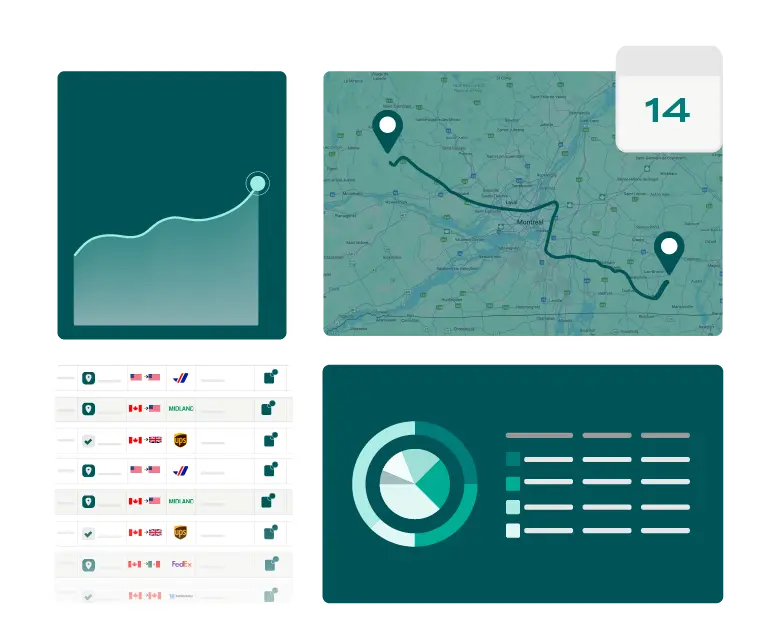
Once you can group variances by carrier, lane, and service type, instead of just by shipment, patterns become easier to catch. Tracking recurring billed variance alongside other transportation KPIs, like on-time delivery and cost per shipment, gives a fuller picture of where a carrier or a lane is actually costing you more than the quote suggested.
Once a pattern shows up, the fix is rarely just a call to the carrier. It might mean correcting how a warehouse team records dimensions, adjusting a service selection at booking, or looking more closely at why a specific carrier’s accessorial charges keep landing on the same lane.
Accessorial charge prevention checklist
A simple way to keep this organized is to sort every accessorial into one of three actions: Predict, Prevent, or Detect.
Predict
Identify known service and site constraints before requesting the quote.
Prevent
Keep weight, dimensions, commodity data, and freight class accurate and consistent.
Detect
Compare quoted vs invoiced costs and flag charges that recur on the same lane, carrier, or destination.
Better cost visibility turns accessorials into manageable data
The goal isn’t to eliminate every accessorial charge. Some reflect a real service your shipment needed. The goal is to prevent the ones that are avoidable, anticipate the ones that are predictable, and make the rest visible enough to inform better decisions on the next shipment.
Frequently Asked Questions
Can accessorial charges be negotiated with a carrier?
Some can, especially recurring charges tied to a specific lane or service, but many are set by the carrier’s tariff and applied consistently. It’s usually more productive to address the underlying trigger, like packaging or scheduling, than to dispute the charge itself.
Why doesn’t my invoice match my original freight quote?
A quote reflects the information available at booking. If the actual weight, dimensions, commodity description, or delivery conditions differ from what was declared, the carrier adjusts the invoice to reflect what actually happened during pickup and delivery.
Are accessorial charges the same across all carriers?
No. Each carrier sets its own accessorial rules, definitions, and rates, and they can vary by mode, region, and contract. The same shipment scenario can trigger different fees depending on which carrier handles it.
How can I tell if an accessorial charge is legitimate or a billing error?
Compare the invoice against the original bill of lading and quote. If the charge matches a documented event, like a missed appointment or a confirmed reweigh, it’s likely legitimate. If there’s no supporting documentation or it doesn’t match the shipment’s actual conditions, it’s worth flagging for review.
-

Green shipping: reduce shipping waste and costs without slowing fulfillment
By Rubi Rodriguez • September 4, 2026Green shipping depends on operational choices, not just packaging or marketing claims. Right-sized packaging, appropriate service levels, and shipment consolidation can reduce both costs and… -
What is a commercial invoice in shipping?
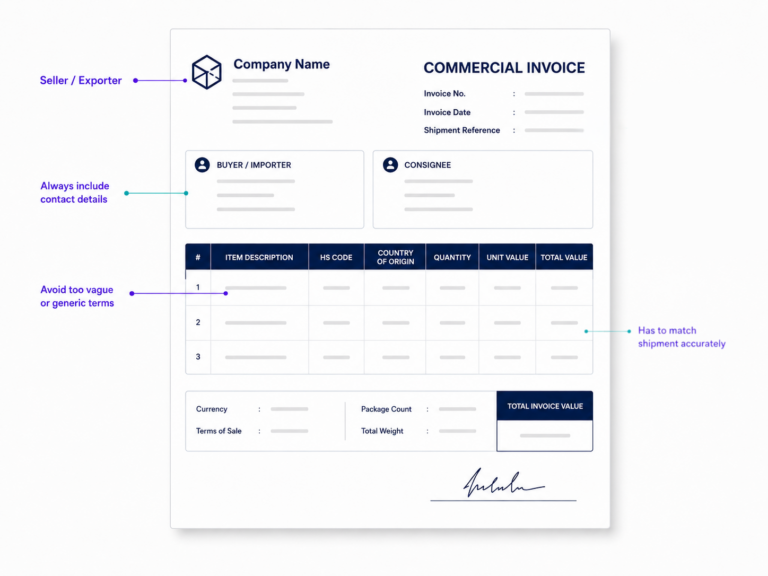
By Rubi Rodriguez • August 28, 2026A commercial invoice must clearly and accurately state the goods, value, parties involved, country of origin, and HS codes to avoid customs delays. Because requirements… -

Pallet shipping: prepare, quote, and move palletized freight without costly mistakes
By Rubi Rodriguez • August 21, 2026Most pallet shipping cost overruns come from inaccurate shipment data rather than the carrier rate itself. The best quote is the one that reflects complete…