
What is a 3PL in shipping?
By Rubi Rodriguez
Published on June 5, 2026
In short
A 3PL helps businesses outsource physical logistics execution, such as warehousing, fulfilment, packing, shipping, and returns. A 4PL manages broader logistics coordination across providers, while a 3PL usually handles execution. The right choice depends on the real bottleneck: physical fulfilment capacity, network-wide coordination, or fragmented shipping workflows.
In short
A 3PL helps businesses outsource physical logistics execution, such as warehousing, fulfilment, packing, shipping, and returns. A 4PL manages broader logistics coordination across providers, while a 3PL usually handles execution. The right choice depends on the real bottleneck: physical fulfilment capacity, network-wide coordination, or fragmented shipping workflows.
A 3PL in shipping is a third-party logistics provider: a company that takes over logistics work such as warehousing, fulfilment, packing, shipping, and sometimes returns.
In simple terms, a 3PL helps you outsource logistics execution.
That is different from shipping software. Shipping software does not store inventory or pick and pack orders. It helps your team manage transportation workflows: rating, booking, tracking, documentation, and carrier integrations.
For growing operations, the key question is not only “What does 3PL mean in shipping?” It is: do you need to outsource fulfilment, or do you need better control over shipping?
What a 3PL actually means in shipping
If you are asking, “What is 3rd party logistics,” it refers to using an external provider to handle logistics activities such as warehousing, fulfilment, shipping, or returns.
That can include:
- receiving inventory;
- storing goods;
- picking and packing orders;
- booking transportation;
- managing returns;
- providing fulfilment and shipping visibility.
So, what is 3PL in supply chain? It points to the same idea at a broader operational level: a company delegates logistics execution to an external partner instead of expanding warehouse space, labour, and fulfilment processes internally. This lets teams focus on sales, production, customer experience, or growth.
How a 3PL differs from a 4PL
A 3PL usually executes logistics. A 4PL, or fourth-party logistics provider, manages a broader supply chain network.
The difference is scope.
A 3PL may operate warehouses, fulfil orders, and arrange transportation. A 4PL typically coordinates multiple providers, systems, and logistics partners across a larger network.
So, 3PL vs. 4PL is not just a terminology issue. It is a control model.
- Choose a 3PL when you need operational execution.
- Choose a 4PL when you need strategic coordination across multiple logistics providers.
Where shipping software fits in
Shipping software sits in a different category.
It does not replace warehouse labour, fulfilment capacity, or a 3PL’s physical infrastructure. Instead, it gives internal teams a control layer for transportation.
That control layer can include:
- live rate shopping;
- shipment booking;
- label and document generation;
- tracking updates;
- carrier connectivity;
- ERP, WMS, and ecommerce integrations.
That is where Lazr fits. Lazr helps businesses connect carrier networks, internal systems, and shipping workflows so teams can manage transportation more efficiently without giving up control of their operation.
When you actually need a 3PL

So, when do you need a 3PL? When your main problem is capacity, and when the bottleneck is physical fulfilment: warehouse space, labour, order handling, packing, shipping execution, or returns.
If your team lacks warehouse space, labour, fulfilment speed, or geographic coverage, shipping software alone will not solve the root issue. You may need a partner to physically execute the work.
You need warehouse space, labour, and fulfilment execution
A 3PL makes sense when fulfilment is becoming a bottleneck.
For example, your order volume may be rising, your SKU count may be growing, or seasonal peaks may be harder to manage. You may also need to ship faster in more regions without opening additional facilities yourself.
In that case, the issue is not simply workflow efficiency. It is physical execution.
You want to outsource operations, not just improve them
A 3PL is also the right move when the business wants to reduce internal logistics responsibility.
That can be an operations team decision, a finance decision, or a growth decision. Instead of investing in warehouse leases, staff, equipment, and fulfilment processes, you pay a partner to manage those activities.
The trade-off is control. You may gain capacity and scale, but you also depend on an external provider for a workflow that affects customer experience.
When shipping software is the better answer
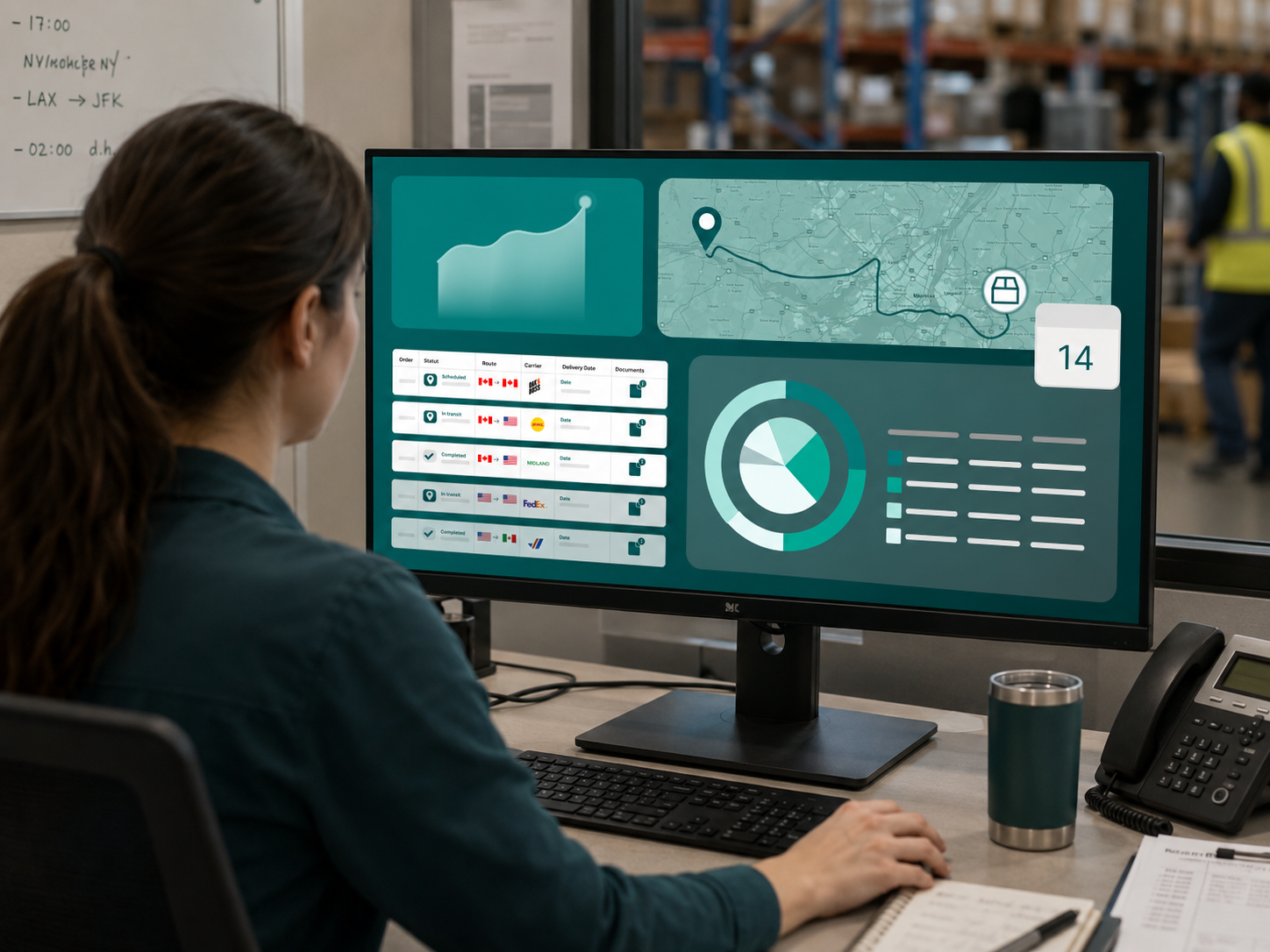
Shipping software is the better answer when you want to keep fulfilment in-house but improve how shipping is managed.
This is common for teams that already have warehouses, people, and processes in place, but still struggle with fragmented transportation workflows.
You still want to keep fulfilment in-house
If your warehouse works and your team can manage fulfilment, outsourcing may be unnecessary.
The better opportunity may be to improve how shipments move through your carrier network: faster quoting, cleaner booking, better visibility, and fewer manual steps.
Your pain is rating, booking, tracking, and integrations
Many teams do not have a fulfilment problem. They have a coordination problem.
They are switching between carrier portals, comparing rates manually, copying tracking numbers, generating documents separately, or pushing shipping data back into internal systems by hand.
That is where shipping orchestration software and supply chain automation can create value.
Lazr helps automate rating, booking, tracking, and shipping documentation across parcel, LTL, pallet, and freight workflows. It also connects with ERP, WMS, and carrier systems, helping teams reduce manual work while keeping their existing operation.
You need multi-carrier execution without giving up your operation
Multi-carrier shipping gets complex when each carrier has its own portal, pricing, service levels, documents, and tracking flow.
For teams managing multi-carrier execution, a shipping software centralizes carrier selection, booking, tracking, and shipping data without forcing them to outsource fulfilment to a 3PL.
A simple decision framework: 3PL, 4PL, or shipping software?
| Choose | If your real problem is |
|---|---|
| 3PL | You need outsourced warehousing and fulfilment execution |
| 4PL | You need network-wide strategy and coordination across providers |
| Shipping software | You keep execution in-house but need better rating, booking, tracking, and integrations |
The real question is “What problem are you trying to solve?”
A 3PL is not automatically the next step for every growing shipper.
If the problem is physical capacity, a 3PL may be the right answer. If the problem is network-wide coordination, a 4PL may be a better fit.
But if the problem is transportation workflow, such as quoting, booking, tracking, documentation, integrations, or multi-carrier visibility, shipping software is often the more direct solution. For many growing teams, the issue is not that they need to give up fulfilment. It is that their shipping stack has become too manual, fragmented, and slow.
The right choice depends on what you need to control
So, what does 3PL mean in shipping?
It means outsourcing logistics execution to a third-party provider. But the better question is whether outsourcing is actually what you need.
For teams that are not ready to outsource fulfilment, Lazr provides the shipping control layer needed to orchestrate transportation more efficiently across systems, carriers, and workflows.
FAQ
What does 3PL stand for in shipping?
3PL stands for third-party logistics. In shipping, it refers to an external provider that handles logistics activities such as warehousing, fulfilment, packing, transportation, and sometimes returns.
Is a 3PL the same as shipping software?
No. A 3PL physically executes logistics tasks, while shipping software helps businesses manage transportation workflows such as rating, booking, tracking, documentation, and carrier integrations.
When should a business use a 3PL?
A business should consider a 3PL when its main challenge is physical fulfilment capacity, such as warehouse space, labour, packing speed, geographic coverage, or returns management.
When is shipping software better than a 3PL?
Shipping software is usually better when a business wants to keep fulfilment in-house but needs more control over carrier selection, rate comparison, booking, tracking, documents, and integrations.
What is the difference between a 3PL and a 4PL?
A 3PL usually handles logistics execution, while a 4PL manages a broader logistics network by coordinating multiple providers, systems, and partners.
-

Accessorial charges in freight: what they are and how to prevent unexpected fees
By Rubi Rodriguez • September 11, 2026Accessorial charges fall into three buckets: predictable service needs, data-driven corrections, and execution-related events. Not all of them can be eliminated, but you can prevent… -

Green shipping: reduce shipping waste and costs without slowing fulfillment
By Rubi Rodriguez • September 4, 2026Green shipping depends on operational choices, not just packaging or marketing claims. Right-sized packaging, appropriate service levels, and shipment consolidation can reduce both costs and… -
What is a commercial invoice in shipping?
By Rubi Rodriguez • August 28, 2026A commercial invoice must clearly and accurately state the goods, value, parties involved, country of origin, and HS codes to avoid customs delays. Because requirements…