
How to calculate dimensional weight for parcel shipping
By Rubi Rodriguez
Published on July 10, 2026
In short
Carriers charge based on billable weight, meaning the higher of actual weight or dimensional weight, which is calculated using length × width × height divided by the carrier’s dimensional divisor. That means packaging size can drive shipping costs just as much as product weight, and comparing carriers on price alone can be misleading when their dimensional rules differ.
In short
Carriers charge based on billable weight, meaning the higher of actual weight or dimensional weight, which is calculated using length × width × height divided by the carrier’s dimensional divisor. That means packaging size can drive shipping costs just as much as product weight, and comparing carriers on price alone can be misleading when their dimensional rules differ.
How to calculate dimensional weight for parcel shipping
Dimensional weight (also called volumetric weight) is what most carriers actually bill you on, not the number on your bathroom scale. If a package takes up a lot of space but weighs very little, carriers charge based on the space it occupies, because that space is what it costs them to move.
That single rule explains a lot of the surprise charges that show up on parcel invoices. Once you know how to calculate it, you can predict the real cost of a shipment before you print the label, not after.
Key Takeaways
- Carriers bill on billable weight, which is the higher of actual weight and dimensional weight, not just actual weight.
- The standard formula is length x width x height, divided by the carrier’s dimensional divisor.
- Packaging size, not just product weight, drives cost. Oversized boxes for light products are one of the most common sources of avoidable parcel spend.
- Comparing carriers on price alone misses the point if their dimensional divisors and billing rules differ.
What dimensional weight means in parcel shipping
Dimensional weight and volumetric weight describe the same idea: shipping cost can be based on the space a package occupies, not only on how much it weighs.
Carriers price this way because a delivery truck and a cargo plane both have a fixed amount of space. A lightweight box that takes up as much room as a heavy one still takes a seat away from something else the carrier could have shipped. So carriers calculate a theoretical weight based on volume, and they bill on whichever number, actual or dimensional, is higher.
How to calculate dimensional weight step by step
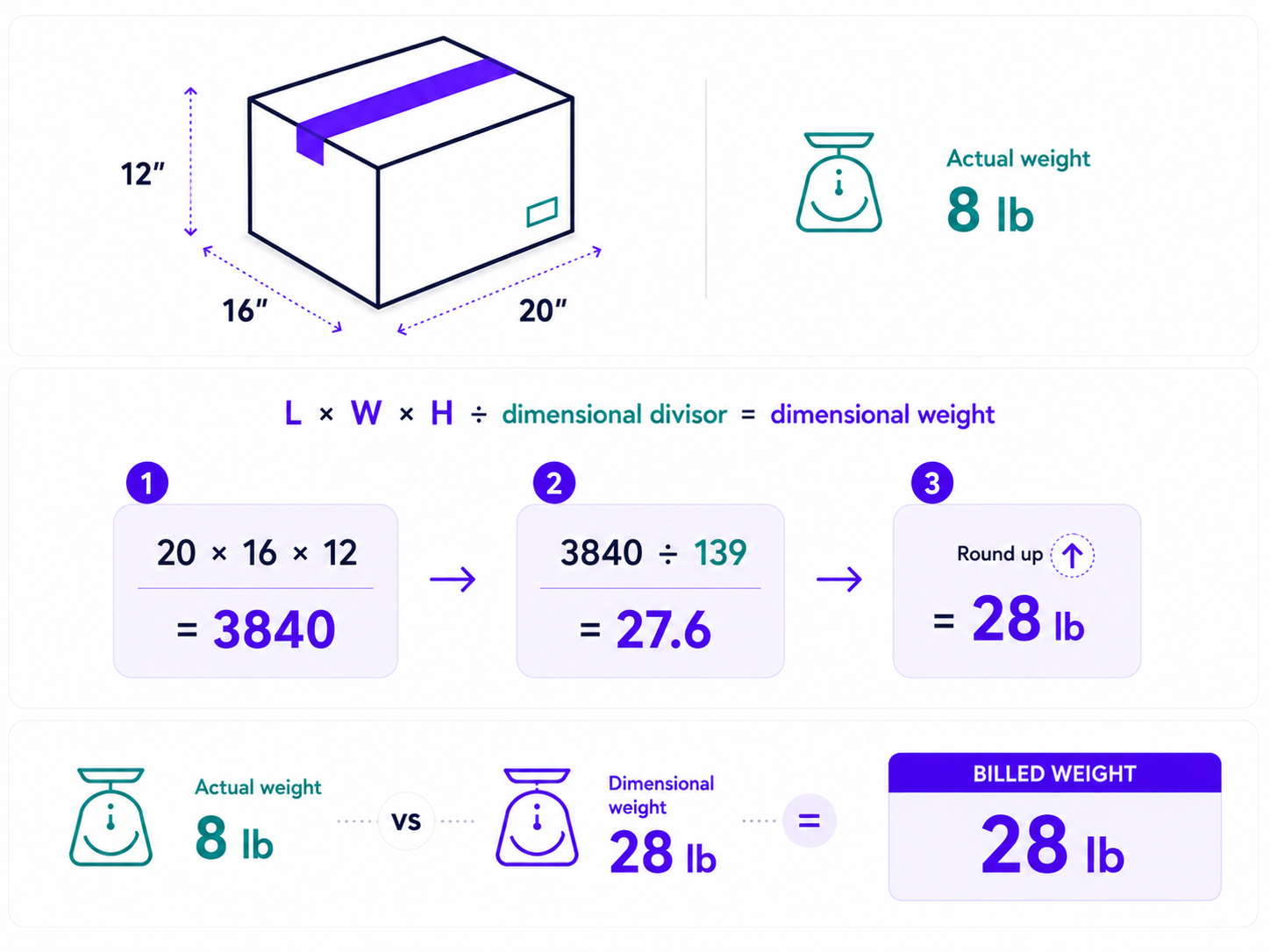
The formula is straightforward:
Length x Width x Height, divided by the carrier’s dimensional divisor = dimensional weight
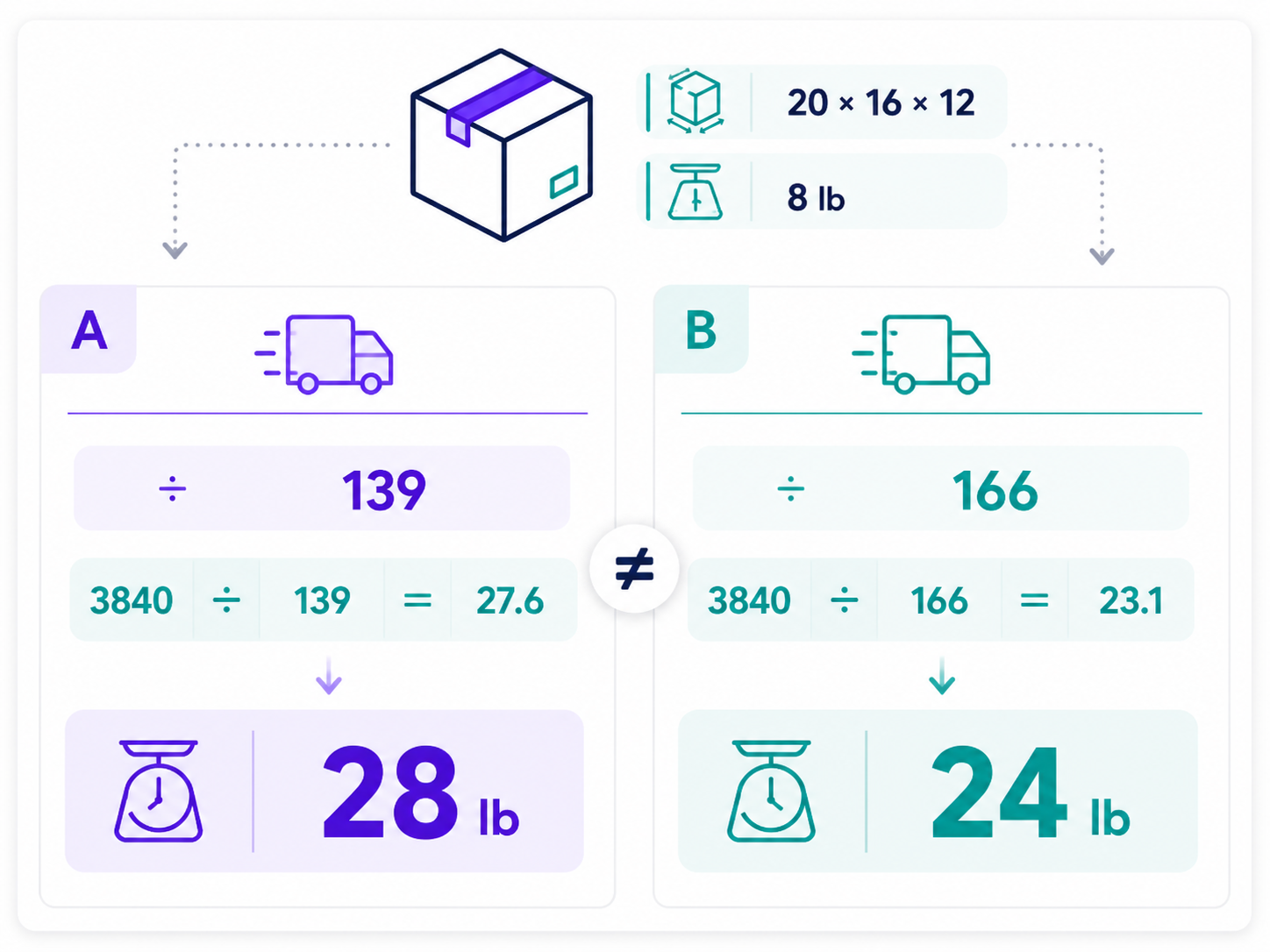
Each carrier sets its own divisor (commonly somewhere between 139 and 200, depending on the carrier and the unit of measurement), so the same box can generate a different dimensional weight depending on who is shipping it.
For example, a box measuring 20 x 16 x 14 inches, divided by a divisor of 139, works out to roughly 32 pounds of dimensional weight, even if the actual product inside weighs only 8 pounds.
Actual weight vs dimensional weight
Once you have both numbers, the rule is simple: carriers bill on whichever weight is higher. If your dimensional weight comes out higher than your actual weight, that is the number that lands on your invoice, regardless of what the product weighs on a scale.
Why dimensional weight affects parcel costs so much
Packaging size can matter more than product weight
A lightweight item shipped in an oversized box, extra padding, or a box with too much empty space can end up costing more than a heavier item shipped efficiently. That is because length, width, and height are not just descriptive details, they are the core inputs in the dimensional weight formula. A carrier’s truck or plane has a fixed amount of space, so an oversized box takes up room that could have carried another shipment, whether or not that box is actually full. The carrier bills for the space it had to reserve, not just for the weight it carried. This is one of the most common and most avoidable sources of excess parcel spend for ecommerce brands.
Carrier and service choices can change the billed result
Dimensional divisors are not standardized across carriers, and some services (like certain expedited tiers) apply different rules than standard ground shipping. Two carriers quoting the same price per pound can bill very differently once dimensional weight enters the calculation. This is exactly why comparing carriers on rate alone, without checking their dimensional rules, can be misleading.
Common mistakes when calculating dim weight
- using the size of the product instead of the size of the final packed box
- ignoring secondary packaging (extra padding, void fill, or double-boxing)
- comparing carriers on price per pound without comparing billable weight
Each of these mistakes leads to the same outcome: a quote that looked competitive turns out to be more expensive once the actual invoice arrives.
How to reduce dimensional-weight charges
Use smaller packaging when possible
Right-sizing your packaging to the product, rather than defaulting to one box size for everything, is usually the single biggest lever for reducing dimensional weight charges.
Match the service to the order profile
Not every order needs the same service level. A lightweight, low-urgency order shipped through a service designed for dense, heavy freight will often cost more than necessary.
Compare carriers before buying the label
Since dimensional divisors and billing rules differ by carrier, the cheapest quoted rate is not always the cheapest billed rate. Comparing actual billable weight across carriers, not just quoted price, is what actually protects margin.
Use a dimensional weight calculator before you ship
Manually running the formula for every order works when you ship a handful of packages a week. It stops working once volume grows, packaging varies, and you are shipping through more than one carrier.
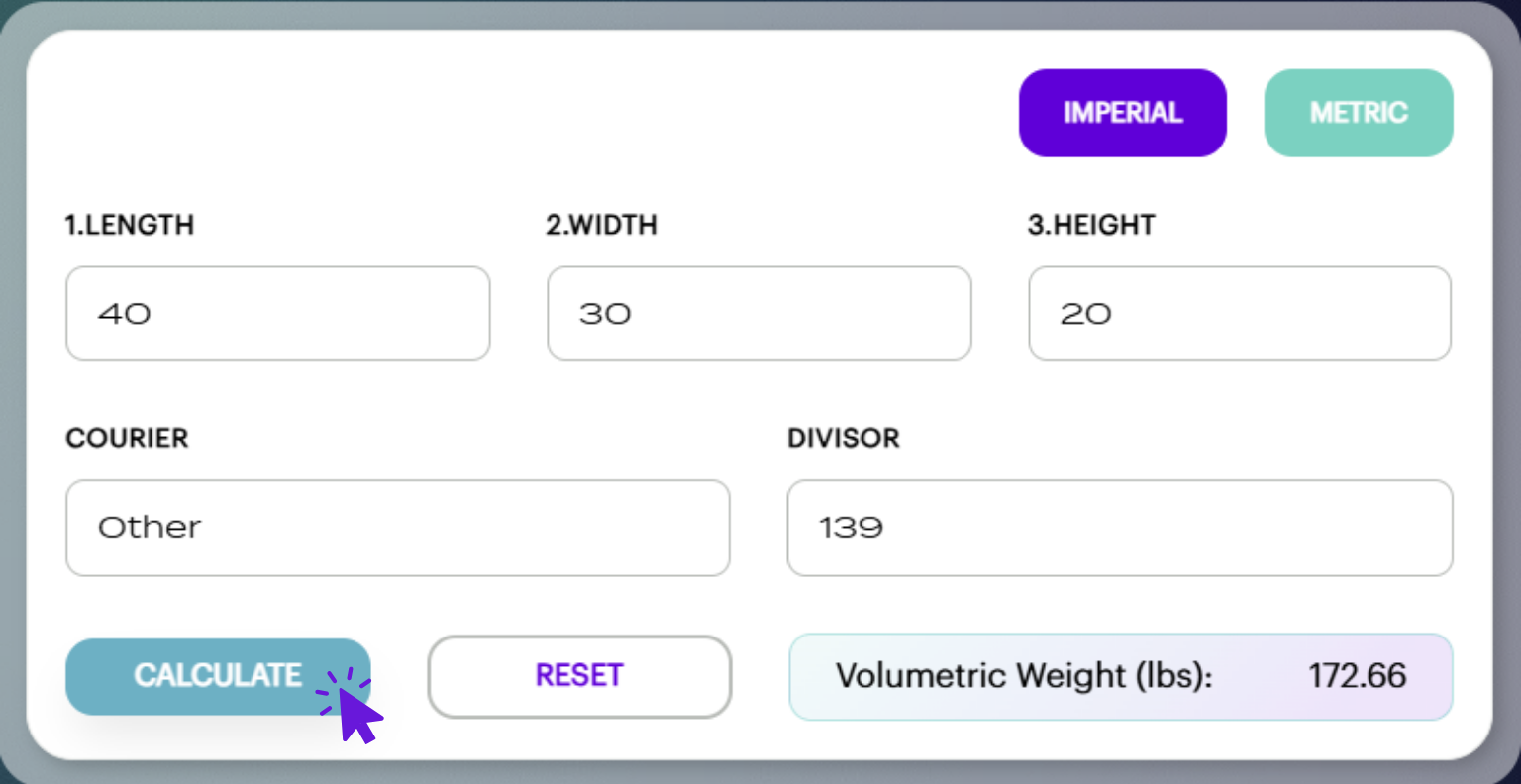
Lazr’s volumetric calculator lets you check dimensional weight before you commit to a box size or a carrier, so you can catch an oversized package before it turns into an unexpected line item on your invoice. From there, comparing carrier rates and service levels side by side is what turns a single calculation into an ongoing cost control habit. Better calculating dimensional weight will not eliminate parcel costs, but it removes the guesswork. You will know the real billable weight of a shipment before you print the label, not after the invoice arrives.
FAQ
How do I calculate dimensional weight?
Multiply the length, width, and height of the package (in inches or centimeters, depending on the carrier), then divide the result by the carrier’s dimensional divisor. Compare that number to the actual weight; carriers bill on whichever one is higher.
What is a typical dimensional divisor?
Divisors commonly range from 139 to 200 depending on the carrier and the shipping service. There is no universal standard, which is why the same box can generate different billed weights across carriers.
Does dimensional weight apply to all parcel shipments?
Most major parcel carriers apply dimensional weight pricing to domestic and international parcel shipments, though thresholds and divisors vary. Very small, dense packages are less likely to be affected since their actual weight will usually exceed their dimensional weight.
Can better packaging actually lower my shipping bill?
Yes. Reducing box size and cutting unnecessary void fill directly lowers the volume used in the dimensional weight formula, which can lower the billed weight even when the product itself has not changed.
-

Accessorial charges in freight
By Rubi Rodriguez • September 11, 2026Accessorial charges fall into three buckets: predictable service needs, data-driven corrections, and execution-related events. Not all of them can be eliminated, but you can prevent… -

Green shipping
By Rubi Rodriguez • September 4, 2026Green shipping depends on operational choices, not just packaging or marketing claims. Right-sized packaging, appropriate service levels, and shipment consolidation can reduce both costs and… -
What is a commercial invoice in shipping?
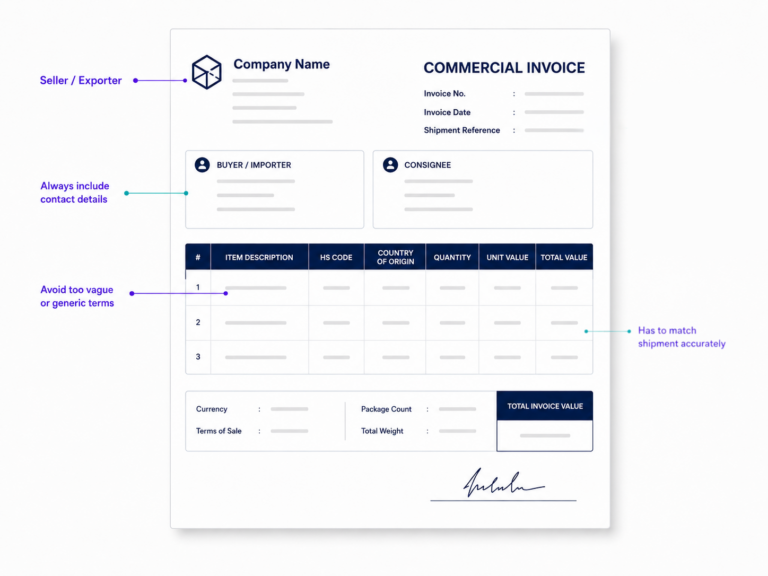
By Rubi Rodriguez • August 28, 2026A commercial invoice must clearly and accurately state the goods, value, parties involved, country of origin, and HS codes to avoid customs delays. Because requirements…